
This case study outlines the key lessons learned from the introduction of digital processes to the Continuing Healthcare (CHC) and Complex Care Service in Cheshire and the Wirral between 2016 and 2018.
Achievements

Key Message
- The CCGs’ digital journey has delivered significant quality benefits and cost reductions
- These cannot all be attributed to the digital solution alone. Many derive from the extensive preparatory work required to ensure successful implementation of an effective digital platform
- The digital platform has enabled effective tracking of patients, timely movement through the system and clarity around potential blockages
- The process has helped the service to become more solution focused, better able to learn quickly and unafraid to fail fast – all attributes that contribute to the mind-set required to drive forward digital and technology improvement in CHC.
Key Focus
Better outcomes
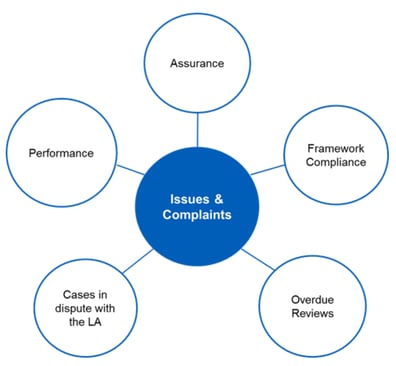
Increase transparency and engagement and decrease complaint and appeals
Better experience
Standardise the patient journey to reduce variation.
Better use of resources
Reduce transaction time by removing duplication and double handling across the patient journey
Approach
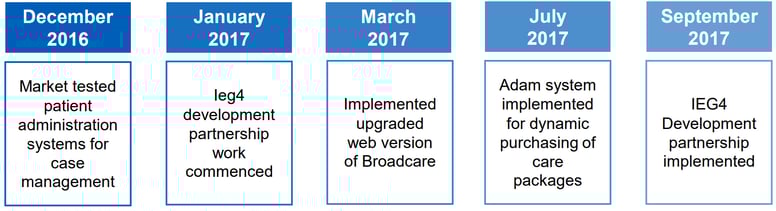
The digital journey for service improvement began in December 2016. The service worked closely with digital solution providers IEG4, using agile methodologies to ensure end-user involvement in research and consultancy. This shaped the development of a digital platform that could capture the correct data, share it securely with the
appropriate professionals and ensure that pathways are visible and fully auditable.
The service worked closely with digital solution providers IEG4, using agile methodologies to ensure end-user involvement in research and consultancy. This shaped the development of a digital platform that could capture the correct data, share it securely with the appropriate professionals and ensure that pathways are visible and fully auditable.
Phase One
Phase one of the digital solution (known as CHC2DST), was soft-launched in September 2017. This comprised a
digitised checklist up to the DST stage of the patient pathway, which was developed using the national domains and scoring criteria.
Training was delivered to support use of CHC2DST, which is simple to use and will not allow the user to progress
until all fields have been completed. This improved the quality and increased the rate of first time referral acceptance. During phase one, the DST remained a manual process, to allow the new ways of working to become embedded across the service.
Phase Two
Following the soft launch and further development, phase two was rolled out in April 2018. This included digitisation of the DST and an automated workflow process.
The workflow management system includes functionality to track patients from referral through to decision-making.

Originally published on NHSAccelerator.com
.svg)